Body-wide
Which health areas need attention after menopause?
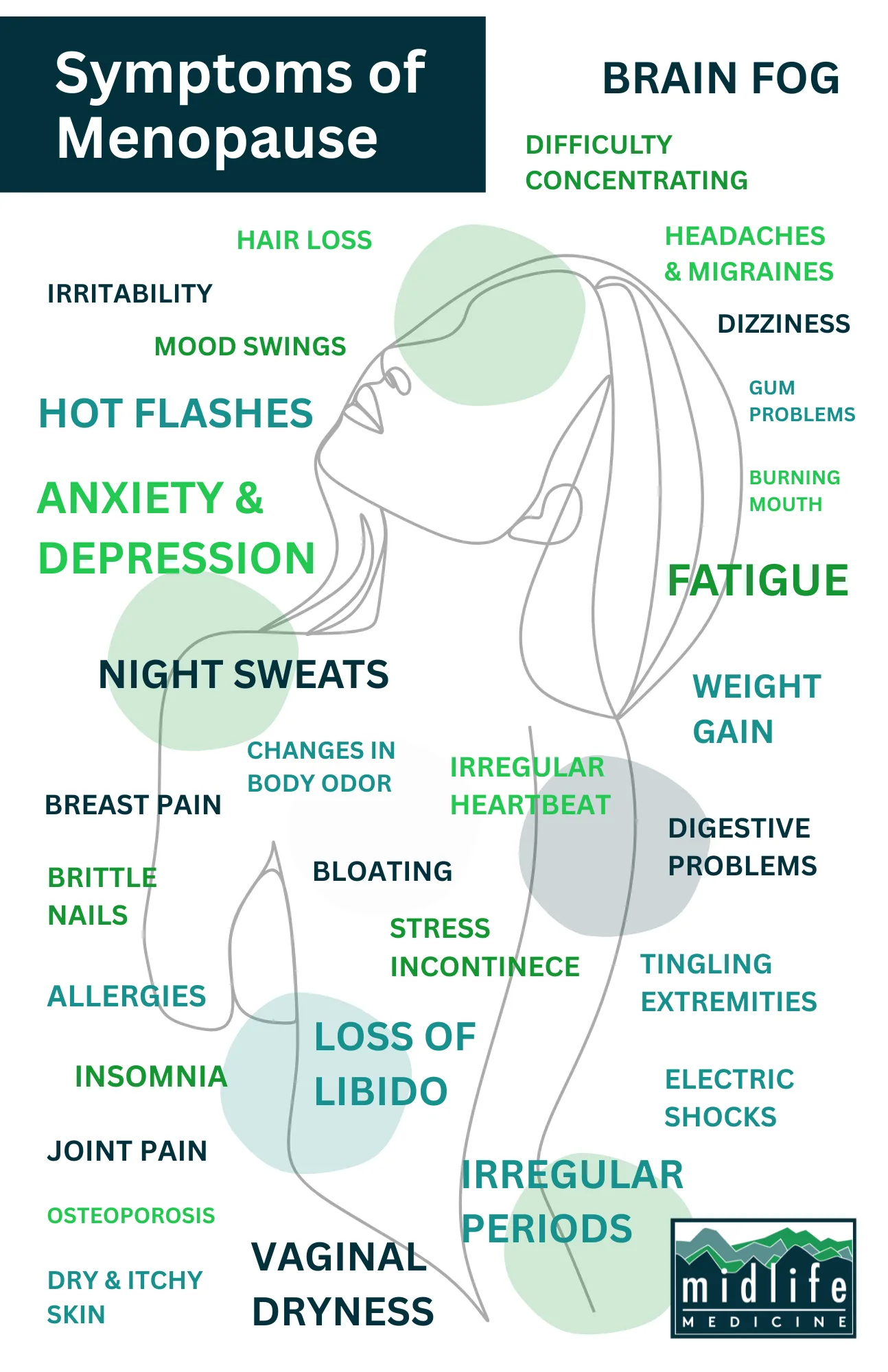
Most people think of estrogen as just a reproductive hormone, and it is so much more than that. Estrogen is better understood as a maintenance signal. Cells throughout your body — in your blood vessels, your bones, your brain, your bladder — carry receptors for estrogen. For decades, it has been quietly telling those tissues to keep repairing, keep rebuilding, stay flexible.
When estrogen falls, that signal goes quiet. Nothing breaks overnight. But routine upkeep slows down, and processes that estrogen had been holding in check speed up. That’s why menopause shows up in so many different systems at once — and why the years right after it are when a plan makes the most difference.

Cardiovascular health
Estrogen helps keep artery walls flexible and helps the liver clear LDL cholesterol from the blood. As it falls, arteries stiffen, LDL rises, and blood pressure creeps up. Heart disease is the leading cause of death in women, and risk climbs sharply after menopause — one of the most overlooked reasons to take this transition seriously.
Weight and insulin resistance
Estrogen influences both where your body stores fat and how well your muscles respond to insulin. After menopause, fat shifts from the hips and thighs to the abdomen — and abdominal fat behaves differently, releasing inflammatory signals that make cells less responsive to insulin. The result is a body that handles carbohydrates less efficiently than it did five years ago, on the same diet. This is a physiologic shift, not a failure of willpower, and it responds to a real plan.
Bone health
Bone is living tissue, constantly rebuilding itself. One set of cells breaks down old bone while another lays down new bone in its place. Estrogen keeps those two crews in balance by restraining the cells that break bone down. When estrogen goes, those cells work faster than the rebuilding crew can keep up — and bone is lost. The loss is silent until it isn’t: a hip or spine fracture can permanently change how independently you live. A woman can lose up to 20% of her bone density in the five to seven years following menopause, and of the roughly 10 million Americans with osteoporosis, about 80% are women. A woman’s risk of breaking a hip is equal to her combined risk of breast, uterine, and ovarian cancer. Estrogen is FDA-approved for the prevention of postmenopausal osteoporosis. Screening and early action now prevent fractures later.
Cognitive health
Many women come in quietly convinced they are developing early dementia. Almost always, what they are describing is brain fog — and brain fog is not dementia. Losing a word mid-sentence, rereading the same paragraph three times, walking into a room with no idea why you’re there: these are real, they are common during and after the transition, and for most women they improve.
Here is what’s behind it. Estrogen helps brain cells take up and use glucose, their main fuel, and it supports the deep sleep that consolidates memory. During the transition, the brain is recalibrating how it powers itself, and that recalibration is what many women experience as fog. Imaging research shows the brain largely adapts and function returns.
That said, this window matters. Research from Dr. Lisa Mosconi’s group at Weill Cornell found that Alzheimer’s-related brain changes — including amyloid deposition — begin to appear during the menopause transition in women who carry APOE4, the strongest genetic risk factor for the disease. This work is early, and it does not mean menopause causes Alzheimer’s. But it points to midlife as a window when brain health is being shaped, and it’s a good reason to treat sleep and symptoms seriously rather than wait them out.
Sexual and urinary health
The tissues of the vulva, vagina, urethra, and bladder are among the most estrogen-dependent in the body. Estrogen keeps them thick, elastic, and well-lubricated, and maintains the slightly acidic environment where protective bacteria thrive. When estrogen falls, those tissues thin and dry, lose elasticity, and that protective balance shifts.
The resulting cluster of symptoms has a name: genitourinary syndrome of menopause, or GSM. It covers far more than most women realize — vaginal dryness and burning, pain with sex, loss of sensation, urinary urgency and frequency, leaking, and recurrent urinary tract infections. Many women live with GSM for years without knowing it has a name or that it can be treated, because no one asked.
Two things make GSM different from other menopause symptoms. First, it does not resolve on its own. Hot flashes may fade for some women and persist for years in others, but GSM is progressive — left alone, it steadily worsens. Second, moisturizers and lubricants ease dryness but do nothing to the tissue underneath. Restoring estrogen to the tissue is what actually reverses the change, and low-dose vaginal estrogen is first-line and the best studied. It is delivered in very small amounts that act locally, which is why it’s appropriate for many women who cannot or prefer not to take systemic hormones.